 |


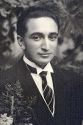
Amir Asadollah Alam
 1919 - 1978 (58 years)
-
Name Asadollah Alam Title Amir Birth 24 Jul 1919 Birjand, Iran 
Gender Male Occupation Mashhad, Iran Direct chief of Imam Reza's shirne in Mashad, AKA "Aastaan-e Qods-e Razavi" Occupation 1957 - 1960 Secretary-General of People's Party
Occupation 1950 - 1962 President of Pahlavi University
Occupation 1964 He was appointed as Chancellor of Shiraz University Occupation 1962 - 1964 Iran Prime Minister Occupation 1967 - 1977 Minister of the Royal Court Death 14 Apr 1978 - According to Wikipedia Encyclopedia; Asadollah Alam was diagnosed with cancer in late 1960s. He was never told of the nature of his illness and was only informed about an 'inbalance' in his blood. In 1977, his illness got worse and he had to resign his post as the minister of court. He died in 1978, a few months before the revolution in Iran.
Notes - Alam's father Amir Ebrahim Alam (AKA Shokat ol-molk) was the governor of the region of Qa'enaat. In the era of Reza Shah Pahlavi he was the minister of telecommunications.
- The title Amir is Arabic and means ruler resp. governor.
- Asadullah Alam was from a Feudal tribe of Birjand
- Early Life: - According to Wikipedia Encyclopedia; Alam was born in 1919 in Birjand and was educated at a British school in Iran. By a royal order from Reza Shah, Alam married Malektaj, the daughter of Qavam Al-Molk Shirazi. The son of Qavam ol-molk was then married to a sister of the Shah, Ashraf Pahlavi. Shortly after desposing of the Qajar dynasty, Reza Shah intended to unite Iran's non-Qajar nobility through inter-marriage.
At the age of 26 he was appointed governor of Sistan and Baluchistan province. At the age of 29 he became Minister of Agriculture in the cabinet of Mohammad Sa'ed.He early displayed what an American acquaintance describes as a combination of native toughness and Y.M.C.A. dedication.[1]
Assadollah Alam became the main landowner of Birjand after his father's death. He was one of Iran's first big landowners to distribute his holdings to the peasants, insisting that his servants eat the same food as his family. Once, when a would-be assassin was nabbed outside his door, Alam gave the man $40, then had him thrashed and sent into the street without his pants.
- Priemiership: - According to Wikipedia Encyclopedia; In 1953, Alam helped organize the counterrevolution that overthrew Dr. Mohammad Mossadegh. Alam was the director of the Pahlevi Foundation, a charitable trust worth at least $133 million, set up by the Shah to finance social-welfare plans out of the profits from royal holdings in banks, industries, hotels. In 1962, he served as Prime Minister at the age of 43.
As premier Assadollah Alam pledged to undertake "an anticorruption campaign with great diligence and all severity." Though the cynical snickered, Alam got free rein from the Shah, carefully began building airtight cases against suspected grafters among Iran's leading bureaucrats and government leaders. His first major target was General Mohammed Ali Khazai, the Iranian army's chief of ordnance, who had parlayed his $6,000 salary into three houses in the suburbs of Tehran, four apartment houses in France, five automobiles, $100,000 in European banks and $200,000 in cash. A military court convicted Khazai of taking a cut out of government contracts and sentenced him to five years of solitary confinement.
In May 1963 Alam's anticorruption drive was in full swing. In Tehran, a military tribunal sentenced General Abdullah Hedayat, Iran's first four-star general and once a close adviser of the Shah, to two years in prison for embezzling money on military housing contracts, brushed aside his plea for appeal with the brusque explanation that "more charges are pending." The former boss of the Tehran Electricity Board was in solitary confinement for five years; cases were in preparation against an ex-War Minister and twelve other generals for graft.
Riots of 1963, The most important event in Alam's premiership were the riots that took place in June 1963 in response to some of the reforms enforced by the Shah and Alam. It was the clerics who triggered the riots during the Muharram holy days. As the faithful jammed the mosques, the clerics assailed "illegal" Cabinet decision, urged their followers to "protect your religion." Small-scale riots quickly broke out in the clerical capital of Qum, led by Ayatullah Rouhollah Khomeini, and in several other cities. Police struck back, arrested Khomeini and some 15 other ringleaders. With that, both sides declared open war and the battle was on.
Screaming " Down with the Shah," 10,000 people, swept through the capital, carrying pictures of Khomeini. Though the whereabouts of the Shah was kept secrets, rows of white-helmeted troops, backed by tanks, immediately sealed off access to royal places in the city and suburbs. In the heart of town green their fire for 40 minute. When the mobs entered government buildings, the troops opened up at point-blank range. The crowd fell back in confusion, regrouped, and raced down main avenues.
Nearly 7,000 troops were called out by Alam's government to restore uneasy peace in Tehran; by then damage was estimated in the millions, at least 1,000 were injured, and the officially reported death toll was 86. It was undoubtedly higher, but since the public cemetery was closed and under heavy guard to prevent further clashes at the gravesides, the real number remained unknown. In his memoirs, Alam notes the number of the dead to be about 200, saying that he immediately arranged for their families to receive a pension from the government. For the first time in a decade, martial law was imposed on the city, along with a dusk-to-dawn curfew. Hoping to preserve quiet for a while, Alam also announced that troops would remain on emergency duty. Their orders: shoot to kill.
Minister of the royal court, In 1964, he was appointed as Chancellor of Shiraz University and served host to the King of Belgium in his visit to Fars Province a few years later. Afterwards he was the minister of court for many years. Furthermore he was the head of the Pahlavi Foundation and bursar. He was also a supporter of the campaign of Richard Nixon, during the United States presidential elections.
As the minister of the royal court he was the closest man to the Shah Mohammad Reza Pahlavi, who now ran the country autocratically. Therefore Alam became the channel through which most of the daily affairs of the country passed. Alam's memoirs, published posthoumously, are exceptionally detailed documents on the life and the deeds of the Shah as perceived by an insider.
Person ID I252 Ghavami English Last Modified 21 Aug 2022
Family Malek Taj Ghavam Marriage 1939 Children 1. Roudabeh Alam d. Aug 19 2022, London, United Kingdom 2. Nazila Alam, b. 14 Mar 1947, Tehran, Iran Family ID F110 Group Sheet | Family Chart Last Modified 16 Jun 2007
-
Event Map 
Birth - 24 Jul 1919 - Birjand, Iran 

Occupation - Direct chief of Imam Reza's shirne in Mashad, AKA "Aastaan-e Qods-e Razavi" - - Mashhad, Iran 
Occupation - Prime Minister - 1962 - 1964 - Iran = Link to Google Earth
-
Photos 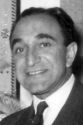
Asadollah Alam
Asadollah Alam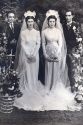
Left to right: Asadollah Alam, Malek Taj Ghavam,Iran Dokht Ghavam and Abolghassem Nafisi Asadollah Alam
Asadollah Alam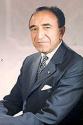
Amir Asadollah Alam 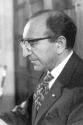
Amir Asadollah Alam-1963
This site powered by The Next Generation of Genealogy Sitebuilding v. 15.0.1, written by Darrin Lythgoe © 2001-2026.
Maintained by Dara Ghavami.